Looking for the best SIP trunk providers in 2026? The top options include PBX.IM for global SIP trunking with instant setup, Twilio for developer-first programmable voice, Telnyx for API-driven infrastructure, Bandwidth for carrier-grade US voice, and Nextiva for UCaaS integrations.
Each provider excels in different areas depending on your business size, technical needs, and budget.
TL;DR
- We compared the top SIP trunking providers on what actually impacts your business: coverage, cost, quality, security, and how fast you can get started.
- Pricing models vary widely: per-minute, per-channel, or pay-as-you-go, so match the model to your call volume.
- The best provider depends on your priorities: API flexibility, global coverage (PBX.IM), enterprise features, or cost savings.
What is SIP Trunking?
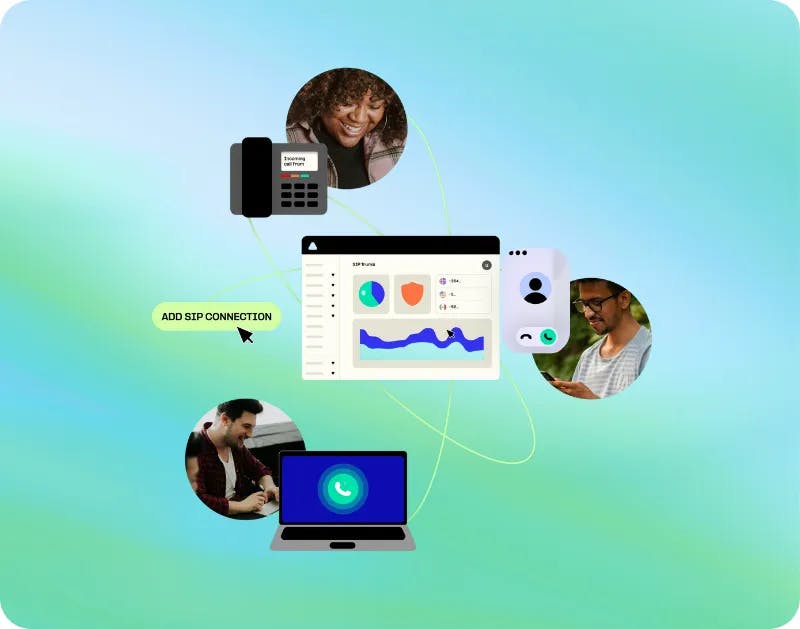
SIP trunking (Session Initiation Protocol trunking) connects your business phone system to the public telephone network using the internet instead of traditional phone lines. It acts as a virtual bridge between your PBX and the outside world, enabling voice calls, video, and messaging over a single data connection.
Choosing the right SIP trunk provider in 2026 matters more than ever. With hybrid work now the norm and cloud PBX adoption accelerating, businesses need providers that offer reliability, global reach, and transparent pricing without locking them into long-term contracts.
What Are the Best SIP Trunking Providers in 2026?
Here are the top SIP trunk providers for businesses in 2026:
- PBX.IM
- Twilio
- Telnyx
- Bandwidth
- Nextiva
- Vonage
- RingCentral
- 8x8
- Global SIP trunking with instant provisioning
- Developer-first programmable voice
- API-driven voice infrastructure
- Carrier-grade US voice
- UCaaS integrations
- Enterprise communications APIs
- Unified communications platform
- Global contact center solutions
How Did We Evaluate The Top SIP Trunking Providers?
We ranked each SIP trunking provider based on what IT managers, business owners, and contact center teams care about most:
- Global Coverage & Number Availability Can you get local numbers in the countries where you do business? The best providers offer DIDs in 100+ countries with instant provisioning.
- Pricing Transparency Hidden fees kill budgets. We prioritized providers with clear, published rates and no surprise charges.
- PBX Compatibility Your SIP trunk should work with your existing phone system, whether that's 3CX, Asterisk, FreePBX, Cisco, or another platform.
- Call Quality & Reliability Uptime guarantees (99.999% or better) and HD voice quality are non-negotiable for business communications.
- Security & Fraud Prevention TLS/SRTP encryption, IP whitelisting, and fraud detection protect your calls and your budget.
- Scalability and Ease of Setup Adding channels should take minutes, not days. Self-service portals and fast onboarding separate the best from the rest.
Best Business SIP Trunking Providers in 2026: Full Comparison
The right SIP trunk can cut costs, boost call quality, and scale with your business. But with so many providers promising the same things, it's hard to know which one actually delivers. We've evaluated the leading SIP trunking providers for 2026 based on pricing, reliability, features, and support to help you find the best fit for your needs.
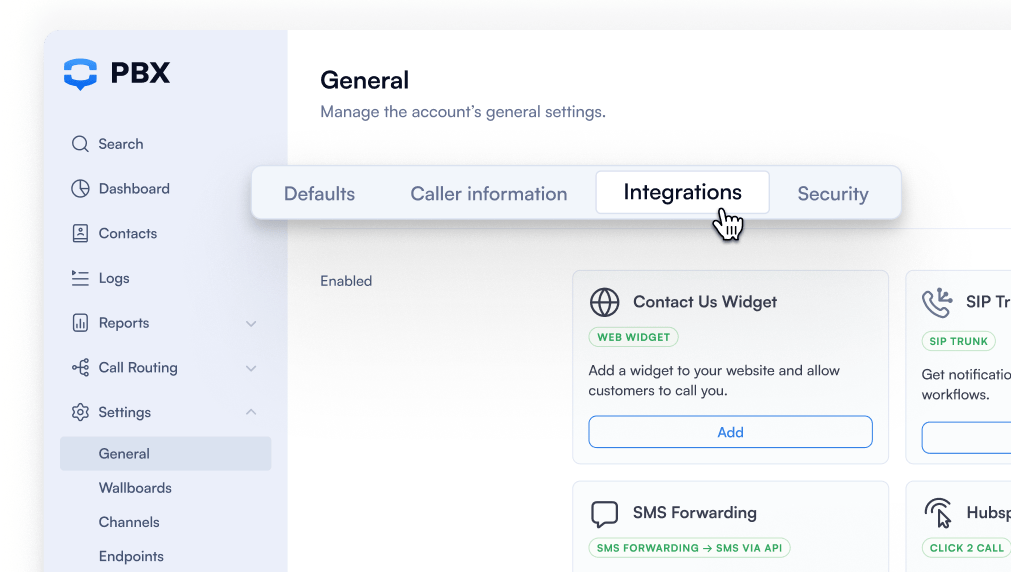
PBX.IM
What is PBX.IM?
PBX.IM is a cloud-first SIP trunking provider built for businesses that need reliable global voice connectivity without the complexity. Founded with a focus on transparent pricing and instant activation, PBX.IM serves everyone from small businesses to enterprises across 150+ countries

Who is it best for?
Businesses looking for straightforward SIP trunking that works with any PBX system, scales instantly, and doesn't require a PhD to set up.
Key benefits in 2026:
- Global SIP trunking across 150+ countries
- Instant activation (setup in under 3 minutes)
- Works with any SIP-compatible PBX
- Transparent, pay-as-you-go pricing
- Cloud-first infrastructure with 99.999% uptime
Key Features
- Local DID Numbers: Geographic numbers in major cities worldwide
- Toll-Free & 400 Numbers: Support for toll-free and shared-cost numbers
- TLS/SRTP Encryption: Secure calls by default
- Call Recording: Currently free with all plans
- Microsoft Teams Direct Routing: Use your PBX.IM numbers directly in Teams
- AI Agent: 24/7 automated call handling
- SMS & WhatsApp: Multi-channel messaging from one platform
Standout Capabilities
PBX.IM differentiates itself with truly instant provisioning. While competitors may take hours or days to activate trunks, PBX.IM gets you live in minutes. The platform also stands out for its pricing transparency, with no channel fees, no contracts, and clear per-minute rates published upfront.
The combination of global coverage with local expertise (including direct carrier partnerships in challenging markets like China) makes PBX.IM particularly strong for international businesses.
Best For
- Businesses expanding internationally
- Companies replacing legacy ISDN/PRI lines
- Remote and hybrid teams needing flexible voice infrastructure
- Organizations that want UCaaS features (voice, video, messaging) in one platform
Pricing
- Outbound calls: Starting at $0.015/minute (US)
- Local DID numbers: $5/month
- Toll-free numbers: $10/month
- Additional channels: $15/channel
- Contracts: None required
- Free trial: Yes, no credit card required
Get Started with PBX.IM
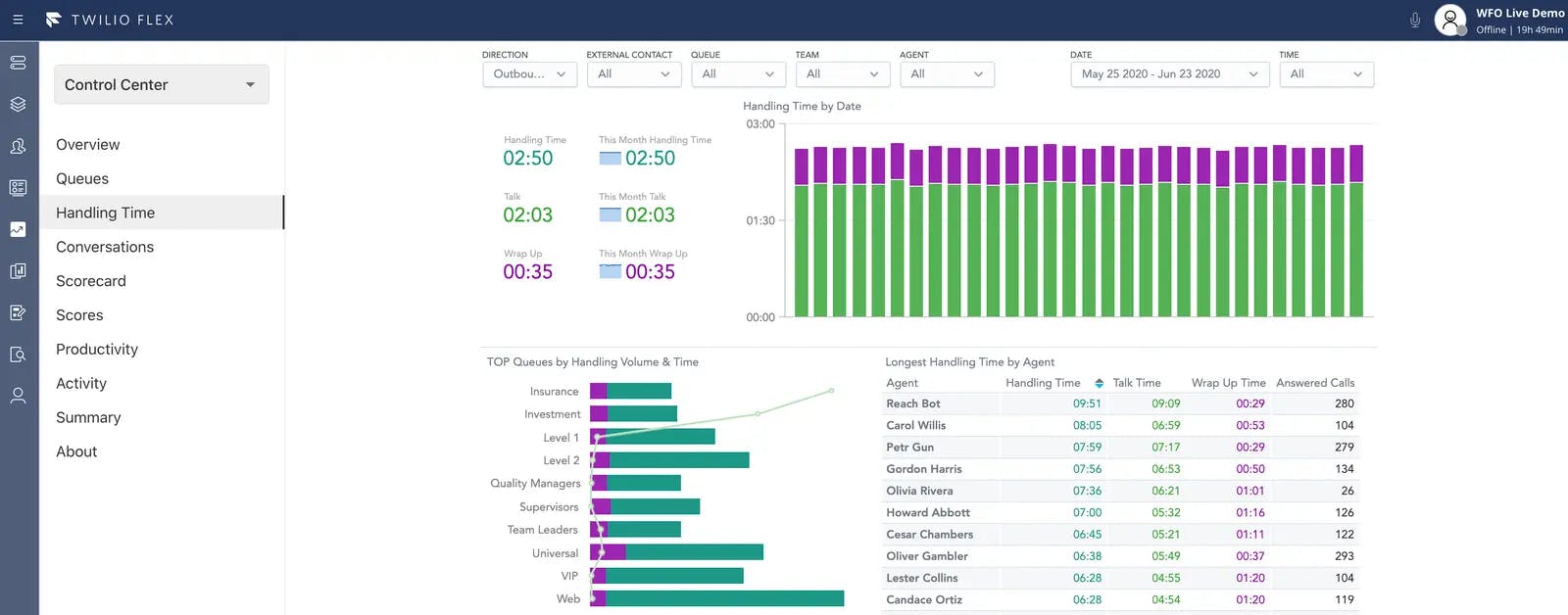
Twilio
What is Twilio?
Twilio is a communications platform-as-a-service (CPaaS) known for its developer-friendly APIs. Their Elastic SIP Trunking product offers programmable voice infrastructure for businesses that want deep customization

Who is it best for?
Development teams building custom voice applications or companies with in-house engineering resources.
Key Features
- Programmable voice APIs
- Global number coverage
- Pay-as-you-go pricing
- Extensive documentation and SDKs
- SIP Insights for call analytics
Standout Capabilities
Twilio's strength lies in flexibility. Developers can build virtually any voice application using their APIs. The platform also offers strong analytics with SIP Insights for troubleshooting and optimization.
Best For
- Developer-first organizations
- Custom voice application builders
- Companies with engineering resources to manage integrations
Pricing
- Termination: Starting at $0.0011/min (toll-free), $0.01/min (US)
- Origination: $0.0034/min (local), $0.0130/min (toll-free)
- DID numbers: From $1.15/month
- No channel fees
Telnyx
What is Telnyx?
Telnyx operates its own global IP network, giving it more control over call quality than providers who rely on third-party carriers. They focus on API-driven voice infrastructure for businesses that need reliability and control

Who is it best for?
Technically sophisticated businesses that want carrier-grade infrastructure with API flexibility.
Key Features
- Private global network
- Mission Control Portal for self-service management
- Programmable voice APIs
- Number management tools
- SHAKEN/STIR support
Standout Capabilities
Unlike providers that lease network capacity, Telnyx owns its infrastructure. This translates to better call quality control and more competitive pricing for high-volume users.
Best For
- High-volume calling operations
- Businesses prioritizing call quality
- Teams that want network-level control
Pricing
- Pay-as-you-go model
- Competitive per-minute rates
- Volume discounts available
- No long-term contracts required
Bandwidth
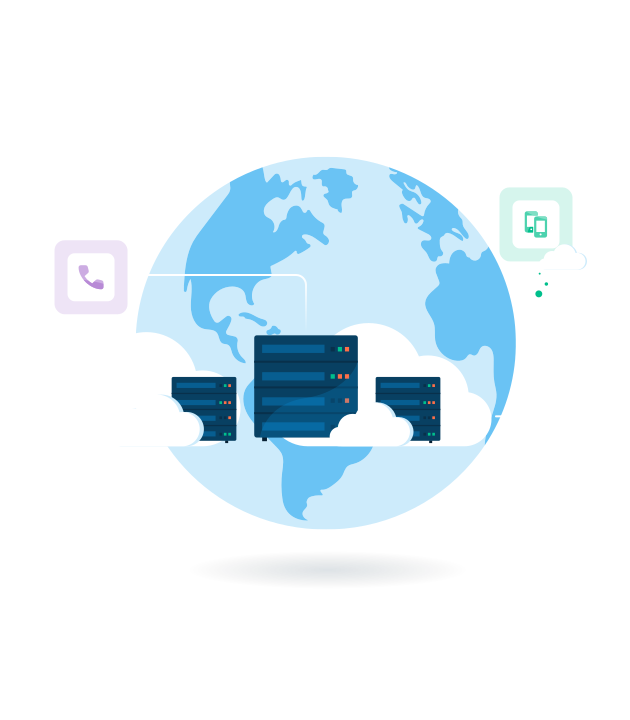
What is Bandwidth?
Bandwidth is a Tier 1 carrier in the United States, meaning they own and operate their own network infrastructure. They provide the underlying voice services for many well-known communication platforms
Who is it best for?
US-focused enterprises needing carrier-grade reliability and compliance.
Key Features
- Tier 1 US carrier
- Direct network ownership
- Enterprise-grade reliability
- Regulatory compliance support
- High-volume capacity
Standout Capabilities
As an actual carrier (not just a reseller), Bandwidth offers unmatched reliability for US calling. They're often the infrastructure behind other VoIP providers.
Best For
- US-centric enterprises
- High-compliance industries (healthcare, finance)
- Large-scale contact centers
Pricing
- Custom enterprise pricing
- Volume-based discounts
- Contact sales for quotes
Nextiva
What is Nextiva?
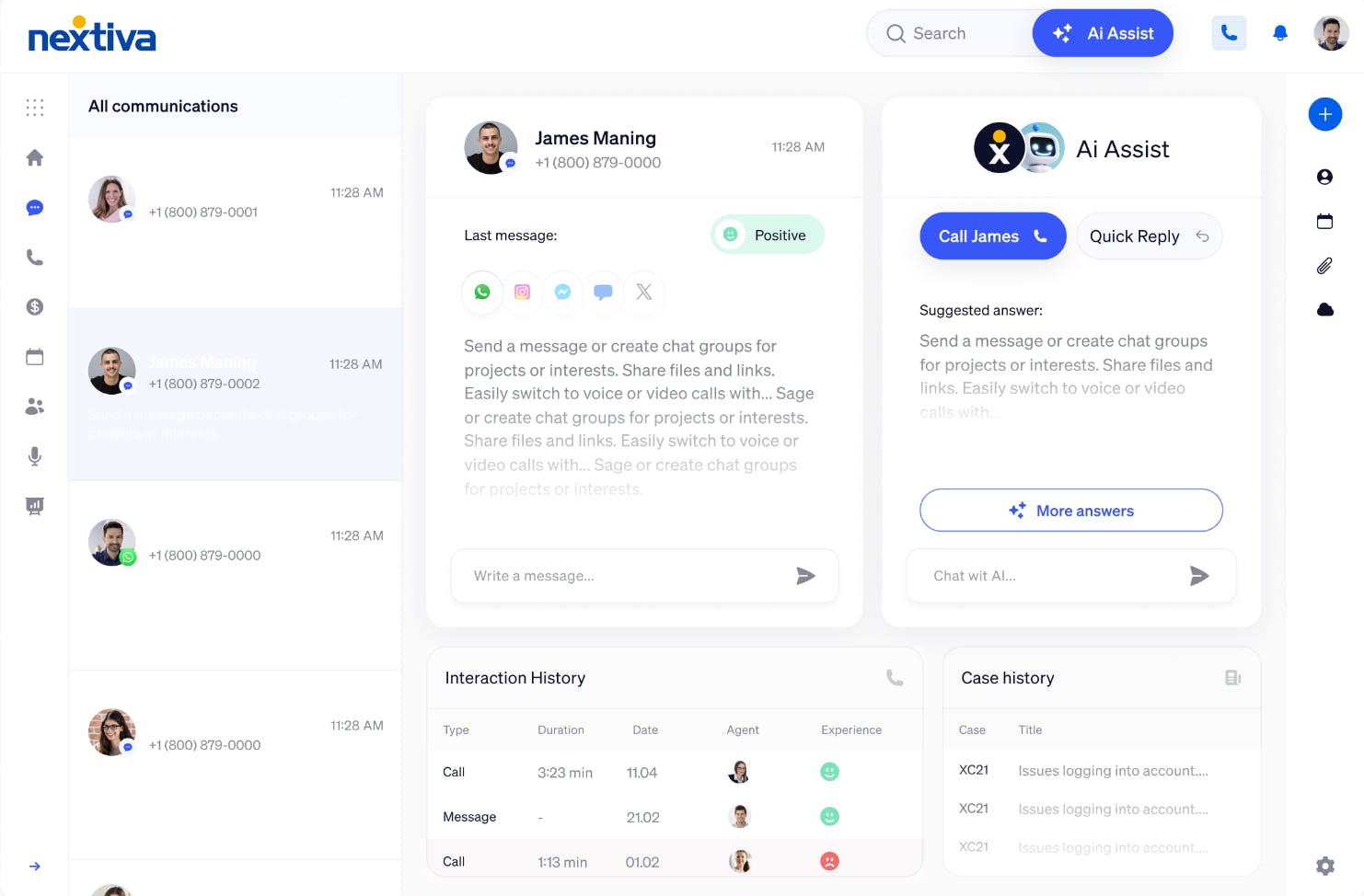
Nextiva is a unified communications provider that bundles SIP trunking with a broader UCaaS platform including VoIP, video conferencing, team messaging, and contact center features
Who is it best for?
Businesses wanting an all-in-one communications platform rather than standalone SIP trunking.
Key Features
- Unified communications platform
- Built-in CRM capabilities
- 99.999% uptime guarantee
- US-based customer support
- Video and team collaboration
Standout Capabilities
Nextiva's strength is integration. Rather than managing separate tools for calling, messaging, and video, everything lives in one platform with a unified interface.
Best For
- SMBs wanting simplicity
- Teams prioritizing customer support quality
- Businesses consolidating communication tools
Pricing
- Plans starting at $15/user/month
- Bundled pricing for UCaaS features
- Volume discounts available
Vonage
What is Vonage?
Vonage offers both UCaaS solutions and communications APIs, making it versatile for different business needs. They serve everyone from small businesses to enterprises

Who is it best for?
Mid-market companies needing flexible deployment options.
Key Features
- Business communications platform
- Communications APIs
- Global coverage
- CRM integrations
- Contact center solutions
Standout Capabilities
Vonage balances ease-of-use with API flexibility, making it accessible to non-technical teams while still offering customization for developers.
Best For
- Mid-market businesses
- Companies needing both UCaaS and API access
- International organizations
Pricing
- Mobile plan: From $13.99/user/month
- Premium plan: From $20.99/user/month
- Custom API pricing
RingCentral
What is RingCentral?
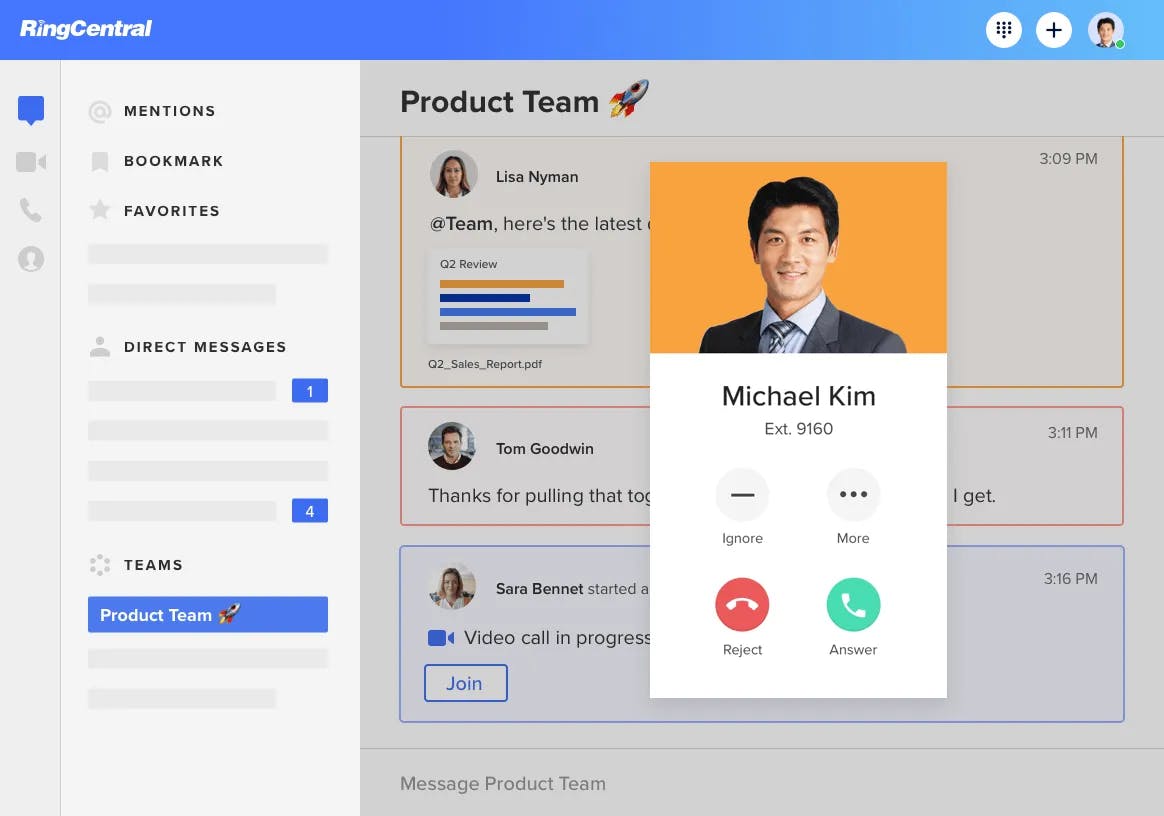
RingCentral is one of the largest UCaaS providers, offering a comprehensive platform that includes voice, video, messaging, and contact center capabilities
Who is it best for?
Enterprises needing a full-featured unified communications platform with extensive integrations.
Key Features
- Complete UCaaS platform
- Extensive app integrations (200+)
- Global office locations
- AI-powered features
- Enterprise security
Standout Capabilities
RingCentral's integration ecosystem is unmatched. With connections to Salesforce, Microsoft, Google, and hundreds of other apps, it fits into almost any tech stack.
Best For
- Large enterprises
- Companies with complex integration needs
- Organizations standardizing on one platform
Pricing
- Core plan: From $20/user/month
- Advanced plan: From $25/user/month
- Ultra plan: From $35/user/month
8x8
What is 8x8?
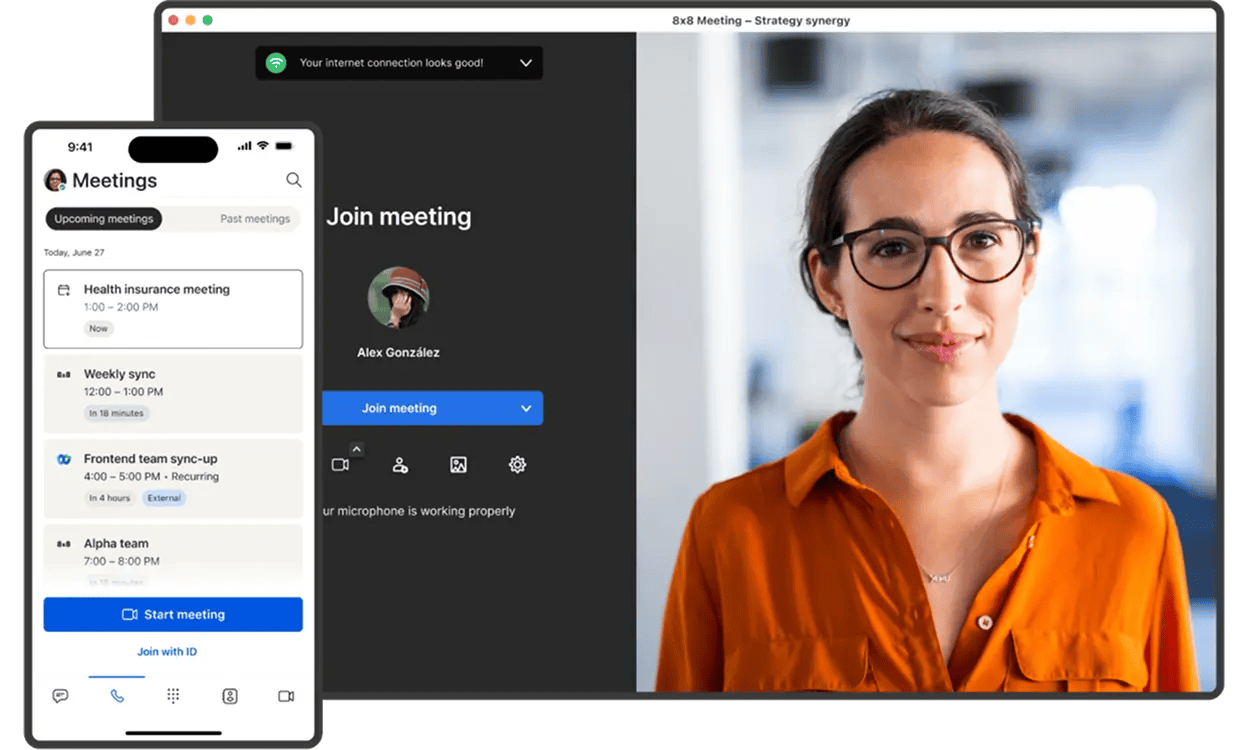
8x8 provides integrated cloud communications, combining voice, video, chat, and contact center in a single platform with strong international capabilities
Who is it best for?
Global enterprises needing contact center features and international calling.
Key Features
- Integrated UCaaS and CCaaS
- Global reach (100+ countries)
- AI-powered analytics
- Compliance certifications
- Unlimited calling plans
Standout Capabilities
8x8 excels at combining unified communications with contact center features, making it strong for customer-facing organizations with global operations.
Best For
- Global contact centers
- Enterprises with international teams
- Customer service-focused organizations
Pricing
- Custom enterprise pricing
- Bundled voice and contact center plans
- Contact sales for quotes
Quick Comparison Table
Here is an at-a-glance overview of the best options on the market.
- PBX.IM
- Twilio
- Telnyx
- Bandwidth
- Nextiva
- Vonage
- RingCentral
- 8x8
- Global SIP + instant setup
- Developers
- API + owned network
- US carrier-grade
- UCaaS bundle
- Mid-market flexibility
- Enterprise UCaaS
- Global contact center
- $0.015/min
- $0.01/min
- Pay-as-you-go
- Custom
- $15/user/mo
- $13.99/user/mo
- $20/user/mo
- Custom
- 150+ countries
- 100+ countries
- Global
- US-focused
- US-focused
- Global
- Global
- 100+ countries
How Much Does SIP Trunking Cost in 2026?
SIP trunking pricing varies based on the model your provider uses:
Per-Minute Pricing You pay for actual usage. Best for businesses with variable call volumes. Rates typically range from $0.01 to $0.03 per minute for US calls.
Per-Channel Pricing You pay for concurrent call capacity. Good for predictable, high-volume operations. Expect $15-25 per channel monthly.
Pay-As-You-Go No commitments, pay only for what you use. Ideal for small businesses and those testing SIP trunking.
What impacts your costs:
- Call volume and destinations
- International vs. domestic calling mix
- Features like call recording and analytics
- Number of DID numbers needed
- Support level requirements
PBX.IM stands out here with fully transparent pricing: no channel fees, no contracts, and published rates for every destination. You know exactly what you'll pay before making a single call.
How to Choose the Best SIP Trunking Provider
When evaluating SIP trunk providers, ask these questions:
Does it work with my PBX? Confirm compatibility with your existing phone system (3CX, Asterisk, FreePBX, Cisco, etc.) before signing up.
Can I get numbers where I need them? Check availability for local numbers in your target markets. Not all providers cover all countries.
Are there long-term contracts? The best providers offer flexibility without locking you in. Month-to-month options protect your business.
Is pricing clear? If you can't find published rates, that's a red flag. Transparent providers show their pricing upfront.
How fast is the setup? Modern SIP trunking should activate in minutes, not days. Self-service portals speed everything up.
What's included beyond voice? Look for unified features like SMS, WhatsApp, video, and analytics. Managing one platform beats juggling five.
Is service reliable globally? 99.999% uptime and global infrastructure matter if you're operating internationally.
How does SIP Trunking Compare Against Traditional Phone Lines (PSTN/ISDN)?
Businesses are abandoning legacy telephony for good reasons. Traditional phone lines come with high maintenance costs, limited scalability, and aging infrastructure that providers are actively phasing out. SIP trunking offers lower per-call rates, flexible capacity, and features that legacy systems simply can't match.
- Infrastructure
- Scalability
- Costs
- Features
- Maintenance
- Future
- Physical cooper wires
- Manual provisioning (days/weeks)
- Fixed monthly contracts
- Voice only
- High (on-site hardware)
- End-of-life technology
- Internet-based
- Instant (minutes)
- Usage-based, flexible
- Voice, video, SMS, analytics
- Low (cloud-management)
- Cloud-native, evolving
ISDN lines are being phased out across Europe and other regions. PSTN infrastructure is aging and expensive to maintain. SIP trunking offers a clear path forward with lower costs, better features, and future-proof technology.
Why SIP Trunking Remains Relevant in 2026
Despite the rise of all-in-one UCaaS platforms, SIP trunking remains essential infrastructure for modern businesses. It gives you the flexibility to keep your existing PBX while upgrading to internet-based calling. You control your voice infrastructure, choose your own carriers, and avoid vendor lock-in that comes with bundled platforms.
Hybrid Work is Here to Stay Distributed teams need flexible voice infrastructure that works anywhere with internet access.
Cloud PBX Adoption is Accelerating More businesses are moving to cloud phone systems, and SIP trunking provides the connectivity layer.
Demand for Scalable Voice Infrastructure Businesses need to add or remove capacity instantly without waiting for technician visits or hardware installations.
SIP trunking serves as the foundation layer for modern business communications, connecting your phone system to the world while giving you the flexibility to grow.
Why Businesses Choose PBX.IM for SIP Trunking
PBX.IM combines reliable SIP trunking with transparent pricing and hands-on support. You get high-quality voice connections, flexible call routing, and the ability to scale instantly without long-term contracts or hidden fees. Setup takes minutes, not days, and our team is available when you need help.
- Global coverage across 150+ countries with local numbers
- Instant activation in under 3 minutes
- Transparent pricing with no hidden fees or contracts
- Universal compatibility with any SIP-enabled PBX
- Enterprise security with TLS/SRTP encryption by default
- Unified platform combining voice, SMS, WhatsApp, and AI features
"One of the things I appreciate most is how easy it is to self-manage. I was able to set up everything myself without needing to hire any outside help, which saved us both time and money." — Danny Asfour, PBX.IM Customer
Set Up Your Acount
TOP SIP Trunk Providers FAQs
Who provides a SIP trunk?
SIP trunks are provided by telecommunications companies and cloud communications providers. Options range from traditional carriers like Bandwidth to cloud-native providers like PBX.IM, Twilio, and Telnyx. The best choice depends on your needs for coverage, pricing model, and technical support.
What is required for a SIP trunk?
To use SIP trunking, you need a SIP-compatible PBX or phone system, a reliable internet connection with sufficient bandwidth, a SIP trunk account with a provider, and proper network configuration including firewall rules and QoS settings. Most modern phone systems support SIP out of the box, and providers like PBX.IM offer self-service setup that takes just minutes.
How many SIP trunk channels does my business need?
Plan for one channel per concurrent call. If your business typically has 10 people on calls simultaneously, you need at least 10 channels. For contact centers, calculate based on peak call volume plus a buffer (typically 20-30% extra). PBX.IM and other modern providers let you scale channels instantly, so you can start small and add capacity as needed.
What security certifications should I look for in a SIP trunk provider?
Key certifications include:
- SOC 2: Security and availability controls
- ISO 27001: Information security management
- HIPAA compliance: Required for healthcare
- GDPR compliance: Required for EU data handling
- PCI DSS: Required for payment processing
Also verify the provider offers TLS/SRTP encryption, IP whitelisting, and fraud prevention features.
What is the difference between a SIP trunk and VoIP provider?
VoIP is the broad technology for transmitting voice over the internet. SIP trunking is a specific type of VoIP service that connects your existing PBX phone system to the public telephone network.
Think of it this way: VoIP is the highway, and SIP trunking is the on-ramp that connects your office to that highway.
Can small businesses benefit as much as large enterprises from SIP trunking?
Absolutely. Small businesses often benefit even more because:
- Lower costs: No expensive hardware or long-term contracts
- Professional features: Access to enterprise capabilities like auto-attendants and call recording
- Scalability: Start with what you need, grow as your business grows
- Flexibility: Work from anywhere without complex setup
Providers like PBX.IM offer the same features to a 5-person startup as they do to a 500-person enterprise, just with pricing that scales to match.

Andreea Tilibașa specializes in content marketing and strategy for B2B tech brands. At PBX.IM, she writes about cloud telephony so that when you Google "what is SIP trunking" at 2am, you actually get a clear answer. From UCaaS and contact center tools to global voice connectivity, she covers the topics IT teams and business leaders actually care about.