A multichannel contact center lets businesses manage customer interactions across voice, email, chat, SMS, social media, and web in one place. The key is choosing a system that unifies these channels, integrates with your tools, and ensures fast, consistent support.
This guide compares multichannel and omnichannel contact centers, highlights top solutions, and shows how PBX.IM simplifies customer communication with a unified platform.
TL;DR:
- In 2026, businesses can no longer rely on a simple multichannel contact center setup; they need a unified communication system that seamlessly connects every channel, from voice and email to chat, SMS, and social media, to deliver fast, personalized, and consistent support experiences.
- While multichannel contact centers provide flexibility and accessibility across multiple channels, omnichannel solutions take it further by integrating those channels into a single, connected platform that keeps customer context intact across every interaction.
- When choosing a multichannel contact center platform, prioritize solutions that balance ease of setup, scalability, and intelligent automation. Tools like PBX.IM stand out for offering AI-driven transcriptions, Click2Call, and Contact Us Web Widgets, all within a unified, cloud-based dashboard that enhances agent productivity and customer satisfaction.
What Is a Multi-Channel Contact Center?
A multi-channel contact center is a centralized customer service hub that integrates and manages interactions across multiple communication channels. These channels typically include voice calls (VoIP), email, live chat, SMS/text messaging, social media, and web or app-based messaging. Unlike traditional call centers that focus primarily on phone support, multi-channel contact centers allow businesses to engage customers across their preferred channels, providing a seamless and consistent experience.
Rather than restricting customer support to a single medium (such as phone calls), a multi-channel contact center allows agents to manage inquiries coming from multiple communication channels, including:
- Voice (Phone Calls): Customers can speak directly with an agent in real time, allowing for immediate problem-solving and personalized assistance.
- Email: A convenient, asynchronous way for customers to send detailed inquiries or documents, and receive written responses at their own pace.
- Live Chat: Enables instant messaging between customers and agents on a website or app, providing quick answers without the need for a phone call.
- SMS/Text Messaging: Offers fast, on-the-go communication for updates, confirmations, or short support interactions via mobile devices.
- Social Media (e.g., Facebook, Twitter, Instagram): Allows businesses to engage with customers publicly or privately, addressing questions, feedback, and brand mentions on popular platforms.
- Web Forms or Chatbots: Automated or guided online tools that collect customer information, answer basic queries, and route more complex issues to human agents.
- Contact Us Web Widget: A small, interactive element embedded on a website that gives visitors multiple ways to reach support, via chat, callback request, or email, without leaving the page.
Key Features and Capabilities:
- Unified Dashboards: Agents and supervisors can monitor and manage all channels from a single interface, improving efficiency and response times.
- Routing and Queuing: Interactions are smart directed to the right agent, with options for callbacks and prioritization.
- Automation and AI: Self-service bots, AI transcription, automated workflows, and triggers help streamline routine tasks while ensuring human agents handle complex queries.
- Analytics and Reporting: Performance monitoring across channels allows teams to optimize workflows and measure customer satisfaction effectively.
Common Pain Points Addressed by a Multi-Channel Contact Center
A multi-channel contact center helps businesses overcome many traditional customer service challenges by offering multiple ways for customers to communicate. Instead of relying solely on phone calls, it enables interactions through email, live chat, SMS, and social media, improving accessibility, speed, and overall customer satisfaction. The table below highlights common pain points and how a multi-channel contact center helps resolve them.
- Limited Communication Options
- Long Wait Times
- Poor Accessibility
- Lack of Flexibility
- Inconsistent Customer Experience
- Overloaded Call Centers
- Customers dislike being restricted to a single support channel (like phone calls). A multi-channel setup provides flexibility through options such as chat, email, SMS, and social media.
- Handling all inquiries through one channel can lead to delays. Multi-channel systems distribute interactions across several platforms, improving response speed.
- Customers in different time zones or with limited phone access may struggle to get help. Channels like email, chat, and social media make support more accessible and convenient.
- Some issues don’t require a phone call. A multi-channel approach lets customers choose faster, simpler channels for quick inquiries.
- When communication is limited, customers may feel disconnected from the brand. Multi-channel contact centers create a more consistent, responsive experience across touchpoints.
- High call volumes can overwhelm agents and lower service quality. Additional channels help balance workloads and reduce pressure on phone lines.
What Is Multichannel Communication?
Multichannel communication is a business approach that involves interacting and engaging with customers through a variety of communication channels, both digital and traditional. These channels may include email, phone calls, live chat, social media, SMS, websites, mobile apps, and even in-person contact. The goal is to reach customers on their preferred platforms, ensuring greater convenience, accessibility, and engagement.
This approach allows businesses to deliver consistent messages across different touchpoints, helping them connect with a broader audience and build stronger relationships.
How Businesses Use Multichannel Communication for Customer Interaction
Organizations use multichannel communication systems to engage customers at various stages of their journey, from marketing and sales to after-sales support. By offering multiple communication options, businesses can increase engagement, provide faster assistance, and improve overall customer satisfaction.
For example, a customer might discover a product through a social media ad, ask questions via live chat, receive a personalized offer through email, and finalize the purchase by phone. Each interaction takes place on a separate channel but contributes to a cohesive customer experience.
Common Use Cases of Multichannel Communication
- Marketing
- Sales
- Customer Support
- Businesses use multichannel communication systems to deliver promotional messages via email, SMS, social media, and online ads — expanding their reach and personalizing campaigns.
- Sales teams interact with potential buyers through multiple touchpoints such as live chat, email follow-ups, and phone consultations, improving engagement and conversion rates.
- Support teams handle inquiries through channels like chat, email, and social media, offering customers flexibility and quicker resolutions.
What is an Omnichannel Contact Center Platform?
An omnichannel contact center platform is an advanced customer service solution that integrates all communication channels, such as phone calls, email, live chat, SMS, social media, and messaging apps, into one unified communication system. Unlike traditional setups where each channel operates separately, an omnichannel platform ensures a seamless and consistent experience across every touchpoint.
With this system, customers can begin a conversation on one channel (for example, through live chat) and continue it on another (such as over the phone or via email) without losing context or needing to repeat information. Agents have access to a single, consolidated view of the customer’s interaction history through the CRM, allowing them to deliver faster, more personalized, and connected support.
This unified approach not only enhances the customer experience but also improves agent efficiency by centralizing communication management within one cohesive platform.
Multichannel vs Omnichannel Contact Centers: What’s the Difference?
The core distinction between multichannel and omnichannel contact centers lies in how communication channels are managed and how smooth the customer experience is.
Multichannel contact centers provide customers with access to various communication options like phone calls, emails, live chats, social media, and SMS. However, these channels operate independently of one another, functioning as separate silos. This separation often means customers may have to repeat information when switching channels, and agents don’t have a full view of prior interactions. As a result, the customer experience can feel fragmented and inconsistent.
In contrast, omnichannel contact centers integrate all communication channels into one unified system. This integration allows customer conversations and data to flow seamlessly across platforms. Customers can start an interaction on one channel and continue it on another without losing context. Agents have a comprehensive, 360-degree view of the customer's journey, enabling them to offer highly personalized and consistent support. This connected approach delivers a smooth, continuous experience that strengthens customer satisfaction and loyalty.
Comparison Table: Multichannel vs. Omnichannel Contact Centers
- Customer Experience
- Integration
- Customer Data
- Personalization
- Agent Experience
- Technology & Complexity
- Cost
- Use Cases
- Can be inconsistent and disconnected; each channel may require customers to restart interactions.
- Channels operate independently, with little to no integration.
- Limited sharing of customer data between channels; repeated info requests are common.
- Fragmented data limits personalization capabilities.
- Agents typically specialize in one channel, lacking full context.
- Relies on basic routing and siloed systems; easier to implement but less advanced.
- Lower upfront investment but may not support future growth well.
- Suitable for businesses with budget constraints or focused channel strategies.
- Seamless and consistent; customers’ history and context follow them across all channels.
- All communication channels are fully integrated into one platform.
- Provides a unified, 360-degree customer view for agents.
- Deep personalization based on comprehensive customer history.
- Agents handle interactions across channels with full visibility of the customer journey.
- Requires sophisticated, often cloud-based technology and AI to unify data and anticipate customer needs.
- Higher initial cost but delivers long-term value through enhanced experience.
- Ideal for customer-centric organizations seeking seamless, personalized service.
While both multichannel and omnichannel contact centers support multiple communication channels, the key difference lies in integration and customer experience. Multichannel centers offer diverse options but keep them siloed, leading to potential gaps in service.
Omnichannel centers unify these channels, creating a fluid, connected experience that keeps customer context intact and empowers agents with complete information
Key Benefits of Multi-Channel Contact Center
A multi-channel contact center offers significant advantages for businesses striving to elevate customer service and optimize operations. By enabling support across multiple communication channels, such as phone, email, live chat, social media, and SMS, companies can create a more accessible, flexible, and efficient service experience.
Customer Experience Benefits:
- Improved Satisfaction: Customers appreciate the freedom to engage through their preferred channels, whether it’s a quick chat, a phone call, or an email, resulting in a more convenient and accessible support experience.
- Higher Engagement and Loyalty: Multiple touchpoints foster increased customer interaction and strengthen brand loyalty by making it easier for customers to reach out and stay connected.
- Personalized Interactions: By collecting and analyzing data from diverse channels, businesses gain deeper insights into customer preferences and behaviors, allowing for tailored, relevant communication.
- Broader Reach: Being present across various platforms enables businesses to connect with a wider, more diverse audience.
Operational Advantages:
- Enhanced Agent Productivity: A centralized interface consolidates interactions from all channels, reducing the need for agents to switch between multiple tools, which streamlines workflows and boosts efficiency.
- Faster Issue Resolution: Intelligent phone call routing directs inquiries to the appropriate teams, while unified access to customer history empowers agents to resolve issues promptly.
- Comprehensive Customer Insights: Aggregated analytics provide a 360-degree view of customer journeys, helping businesses spot trends and make informed decisions.
- Cost Efficiency: Automation of routine tasks, such as FAQ responses and call routing, reduces staffing requirements and operational costs while minimizing errors.
- Scalability and Flexibility: Multi-channel systems can easily adapt to changing business demands, allowing companies to add or remove channels as needed to meet evolving customer preferences.
- Competitive Edge: Offering multichannel support signals a customer-centric approach that differentiates businesses from competitors relying on single-channel communications.
What Features Should Multichannel Contact Center Software Have?
When selecting multi-channel contact center software or solutions, businesses should prioritize features that enable seamless management of customer interactions across diverse communication channels while enhancing agent productivity and customer satisfaction. Here’s an actionable list of essential capabilities:
- Unified Agent Dashboard
A centralized inbox or interface where agents can handle all channels—phone, email, SMS, live chat, and social media—in one place, streamlining workflow and reducing tool-switching. - Comprehensive Multi-Channel Support
Support for inbound and outbound phone calls (including international), emails, live chat, SMS/text messaging, and social media platforms such as Facebook Messenger and Twitter DMs. - Intelligent Automation & Routing
AI-powered call and message routing that assigns tickets or inquiries efficiently based on agent skills, availability, or language. Interactive Voice Response (IVR) systems and ai auto-dialers further enhance call management and productivity. - Real-Time Analytics & Reporting
Robust dashboards with customizable reports, live queue monitoring, call transcription, and performance metrics tracking to continuously optimize contact center operations. - CRM and Third-Party Integrations
Seamless connectivity with CRM platforms, email systems, chat apps, and social media tools to give agents comprehensive customer insights and maintain consistent communication. - Self-Service & Customer Engagement Tools
Features such as chatbots, automated responses, Contact Us web widgets, and Click2Call functions empower customers to resolve simple issues independently or connect quickly with agents. - AI-Powered Assistance
Smart tools including virtual assistants that handle common queries, suggest agent responses, and access knowledge bases to accelerate resolutions and reduce workload. - Cloud-Based Access & Security Compliance
Cloud infrastructure to support remote teams with secure access, along with compliance with regulations like GDPR and HIPAA to protect sensitive customer data. - Scalability & Customization
Flexible configurations that grow with your business needs, allowing addition or removal of channels, features, or integrations without disruption. - Notification & Activity Alerts
Instant alerts for agents regarding new customer interactions across any channel, enabling prompt and informed responses.
Picking the right multi-channel contact center software means finding a solution that brings all your communication channels together in one place, uses AI and automation to make life easier, connects effortlessly with your existing business tools, and gives you real-time insights, all while keeping your data secure and allowing room to grow.

Top Multichannel Contact Center Software in 2025
In 2025, some of the top multi-channel contact center software solutions include PBX.IM, Nextiva, Vonage, and Dialpad. These platforms are widely recognized for their intuitive user interfaces, seamless integrations, and strong multi-channel capabilities that support businesses of all sizes. They leverage AI and automation to enhance agent productivity and customer experience while offering scalable, cloud-based solutions that can grow with your business.
PBX.IM
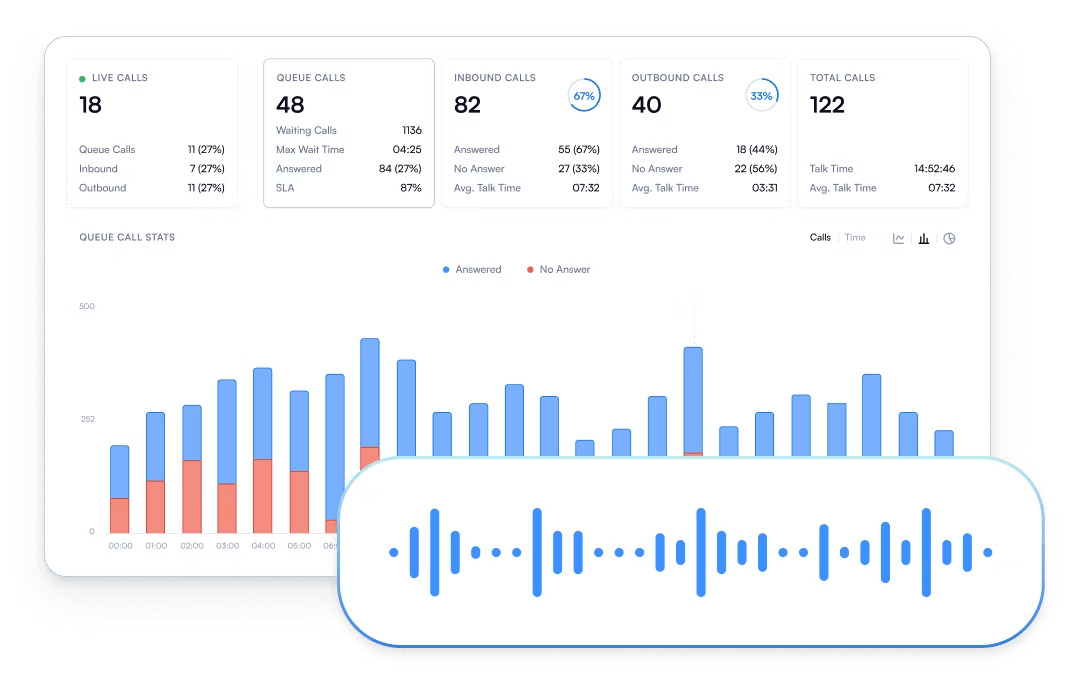
PBX.IM is a cloud-based multi-channel contact center solution designed for businesses seeking a unified communication platform. It offers a range of features tailored to enhance customer engagement and streamline operations.
Key Features:
- SMS Support: Enables businesses to send and receive SMS messages, facilitating direct communication with customers.
- Contact Us Web Widget: Allows website visitors to initiate contact seamlessly, enhancing lead generation and customer support.
- Click2Call: Provides a clickable phone number on websites, enabling customers to connect instantly with your business.
- CRM Integrations: Seamlessly integrates with popular CRM systems, ensuring a unified view of customer interactions.
- Cloud-Based Accessibility: Accessible from anywhere, supporting remote teams and flexible work environments.
- AI Transcription: Transforms every conversation into a precise, searchable transcript. With PBX.IM’s VoIP solutions, your global teams gain AI-driven transcription that works across languages. Get instant call summaries, extract key action points, and share them effortlessly with your team
Pros:
- Comprehensive multi-channel support
- User-friendly interface
- Robust integration capabilities
- Scalable for businesses of all sizes
Cons:
- May require initial setup time for customization
- Some advanced features may have a learning curve
Nextiva
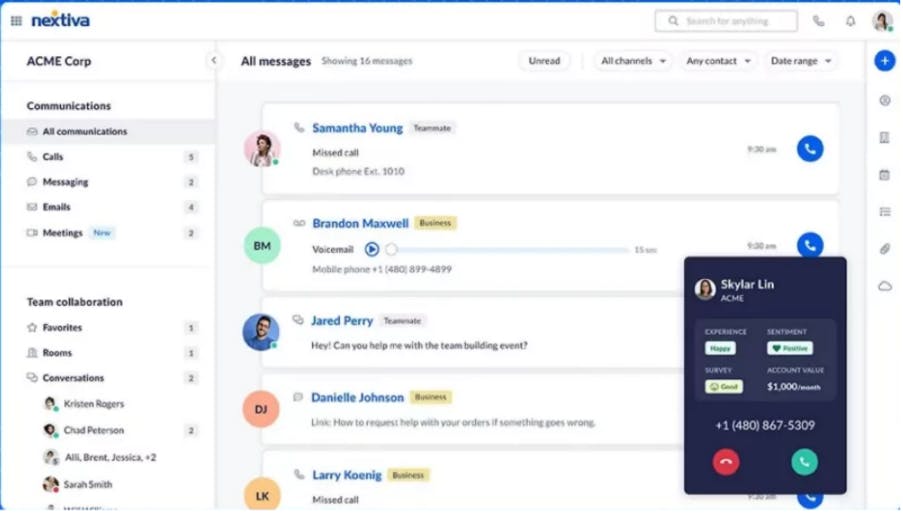
Nextiva offers a unified communication platform with a focus on providing businesses with tools to enhance customer interactions and streamline operations.
Key Features:
- Omni-Channel Engagement: Connects with customers across voice, chat, SMS, email, social, messaging, and webforms.
- Advanced IVR Technology: Replaces multi-level phone menus with automated call flows, including speech recognition and text-to-speech.
- AI Transcription: Converts voice interactions into text for better analysis and record-keeping.
- Screen Pop & Built-in CRM: Provides agents with rich customer insights during interactions.
Pros:
- Strong AI and automation capabilities
- Comprehensive CRM integration
- Scalable solutions for growing businesses
Cons:
- Some users report issues with SMS functionality post-system upgrades Reddit
- May have a steeper learning curve for new users
Dialpad
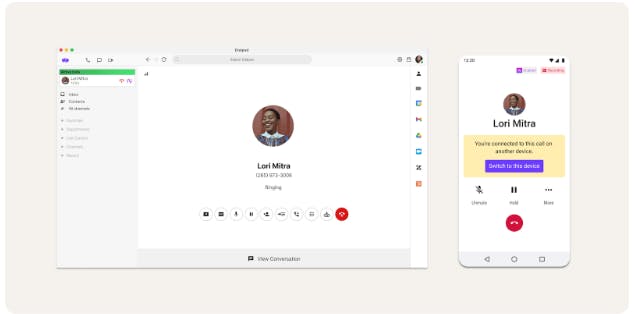
Dialpad is a modern cloud communication platform that integrates voice, video, and messaging into a single application, aiming to enhance team collaboration and customer engagement.
Key Features:
- AI-Powered Transcriptions: Provides real-time transcriptions of conversations for better clarity and record-keeping.
- Unified Communications: Combines voice, video, and messaging into one platform.
- CRM Integrations: Seamlessly integrates with various CRM systems to provide a unified view of customer interactions.
- Mobile Accessibility: Offers mobile applications for on-the-go communication.
Pros:
- Real-time AI transcriptions
- Strong mobile application support
- Unified communication platform
Cons:
- Some users report occasional call quality issues
- Limited advanced features compared to some competitors
Vonage
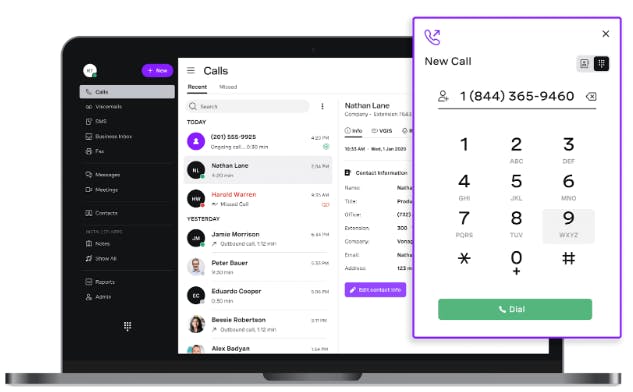
Vonage provides a comprehensive communication platform that includes voice, video, messaging, and collaboration tools, catering to businesses of all sizes.
Key Features:
- Omni-Channel Support: Includes voice, email, live agent, web chat, live message, SMS, video chat, and social channels.
- Click-to-Dial: Allows users to auto-dial any number with one click, enhancing productivity.
- Click-to-Call Me: Provides a quick and easy way for customers to reach your business by adding a button to your website or email signature.
- CRM Integrations: Integrates with various CRM systems to provide a unified view of customer interactions.
Pros:
- Comprehensive omni-channel support
- Strong CRM integration
- Click-to-Dial and Click-to-Call Me features enhance productivity
Cons:
- Some users have reported issues with SMS functionality on Reddit.
- Customer support response times can be slow at times
How to Choose the Right Multichannel Contact Center Solution?
Selecting the right contact center software requires understanding your customers’ needs, evaluating technical capabilities, and ensuring your team and processes are set up for success. Here’s a practical checklist to guide you through choosing a platform that fits your needs now and grows with you in the future.
1. Assess Your Needs and Customer Preferences
- Define communication priorities: Identify the channels your customers use most (phone, email, chat, social media).
- Set clear goals: Determine what you want to achieve, such as improving customer satisfaction, reducing response times, or increasing efficiency.
- Analyze your current setup: Audit existing systems and processes to identify strengths, weaknesses, and gaps.
- Support relevant channels: Ensure the solution supports the channels most important to your audience.
2. Integration with Your Current Tech Stack
- Seamless tool integration: Ensure the software connects with your CRM, ticketing systems, helpdesk platforms, and marketing tools. This provides a unified view of customer data and avoids duplicated work.
- Security and compliance: Verify that the platform meets industry standards like GDPR or HIPAA.
3. Ease of Setup and Scalability
- Simple deployment: Look for solutions that can be configured quickly without heavy IT involvement.
- Scalable growth: The platform should handle increased interaction volumes and new channels as your business expands. Cloud-based solutions, like PBX.IM, allow flexible scaling for evolving needs.
4. AI, Automation, and Analytics Features
- Intelligent automation: Features like AI-powered chatbots, automated responses, and intelligent call routing boost agent productivity.
- Data-driven insights: Real-time analytics on metrics like first-call resolution, customer satisfaction, and operational efficiency help optimize performance.
- Centralized knowledge base: Ensures agents have quick access to information, improving response times and consistency.
5. Optimize Team Structure and Processes
- Specialized teams: Segment support teams by channel expertise and provide focused training.
- Clear SOPs: Establish standard procedures for inquiries, escalations, and data privacy to maintain high service quality.
6. Support and Reliability
- Vendor support: Ensure access to responsive technical assistance and implementation support.
- Operational reliability: Check uptime guarantees and cloud reliability to keep your contact center running smoothly.
7. Cost-to-Value Ratio
- Evaluate total cost: Balance licensing, implementation, and ongoing expenses against the benefits of efficiency, customer engagement, and reduced operational costs.
- Value-focused solutions: Platforms like PBX.IM offer advanced features at competitive prices, delivering strong ROI for businesses of all sizes.
8. Future-Proofing and Continuous Improvement
- Request demos and test the platform: Evaluate usability and alignment with long-term goals. Many tools don’t allow full testing before purchase, but PBX.IM offers a free version that lets you try all features in a real-life scenario, no credit card required.
- Monitor KPIs: Track metrics continuously to optimize operations, improve agent effectiveness, and enhance customer loyalty.
- Plan for growth: Choose a solution that scales with your business and adapts to evolving customer expectations.
How to Set Up a Multi-Channel Contact Center?
Setting up an effective multi-channel contact center involves careful planning, the right technology, and continuous improvement. Here’s a step-by-step guide to get started, with examples from platforms like PBX.IM to illustrate key features and best practices.
1. Assess Customer Needs and Choose the Right Technology
Start by understanding which communication channels your customers prefer—whether that’s phone calls, email, live chat, SMS, or social media. Analyze customer behavior and interaction volumes to prioritize channels that matter most.
Set clear goals for your contact center, such as improving first response times or boosting customer satisfaction (CSAT). Define measurable KPIs to track progress.
Next, select a contact center platform that supports your chosen channels and integrates smoothly with your existing tools like CRM systems. Look for features such as a unified agent dashboard, intelligent call routing, real-time analytics, and AI-powered automation. For example, PBX.IM offers a centralized dashboard and robust channel integration that simplify managing customer interactions across platforms.
2. Design an Integrated and Consistent Customer Experience
Map out your customer journey to identify how users interact with your brand across channels. This helps pinpoint friction points and ensures a cohesive, seamless experience.
Maintain consistent brand messaging and tone across all communication channels. Integrate your CRM and helpdesk systems so agents have full visibility into customer history, enabling personalized and efficient service.
Implement intelligent routing technology to direct inquiries to the best-suited agents based on skills, availability, and channel type. PBX.IM’s smart routing and omnichannel features make this process smooth and efficient.
3. Launch in Phases, Measure, and Optimize
Roll out your contact center gradually, starting with the most popular channels. As the system stabilizes, add additional channels and features.
Continuously monitor key performance metrics like average response time, resolution rates, and customer satisfaction scores. Collect feedback from both customers and agents to identify strengths and areas for improvement.
Use data-driven insights to refine your processes, update training programs, and optimize your channel strategy. PBX.IM’s real-time analytics and reporting tools support ongoing performance evaluation and improvements.
How Multichannel Centers Improve the Support Experience?
Centralized Communication: Agents handle all channels—phone, email, chat, SMS, social media—from a single platform, speeding up responses and cutting down on time wasted switching between tools. This consolidation helps reduce costs, with 71% of companies using next-gen platforms seeing an average 9% reduction in cost per assisted contact.
Personalized Experiences: Customers can start a conversation on social media, continue it via live chat, and finish over the phone without repeating themselves. This seamless channel switching meets rising expectations—70% of customers prefer brands that offer support across multiple channels, but only 13% of businesses fully maintain customer context across these channels, highlighting a big opportunity to improve satisfaction.
Better Tracking & Analytics: Managers get full visibility into every customer interaction across channels, helping identify trends and optimize service. Companies with strong multichannel engagement see up to 10% year-over-year growthup to 10% year-over-year growth, a 10% increase in average order value, and a 25% boost in close rates thanks to smarter, data-driven decisions.
Improved Agent Collaboration: Unified customer data and shared context let agents work together seamlessly, delivering consistent, high-quality support no matter who handles the case. This helps meet the expectation of 80% of customers wanting live agents to answer within 20 seconds, which directly drives higher satisfaction scores.
Why Choose PBX.IM Multichannel Contact Center Solution?
PBX.IM offers a powerful, all-in-one multichannel contact center platform designed to streamline communication across phone, email, chat, SMS, and social media. With features like AI-powered transcriptions, intelligent call routing, and unique tools such as the Contact Us Web Widget and Click2Call, PBX.IM helps businesses deliver fast, personalized customer support while boosting agent productivity.
Its unified call monitoring dashboard makes managing conversations easy, while seamless integrations with CRM and other business systems provide agents with complete customer context—ensuring smooth, consistent experiences. Plus, PBX.IM’s cloud-based flexibility and strong security protocols make it scalable and reliable for businesses of all sizes.



David Pop is a copywriter and marketing strategist specializing in VoIP and business communication solutions. At PBX.IM, he leverages his expertise in cloud telephony and modern communication technologies to craft clear, insightful content that helps business leaders and IT professionals understand and optimize their systems. With extensive experience in marketing and content development, David brings precision and clarity to complex topics, ensuring businesses can make informed decisions about their communication infrastructure.